Executive Summary
The sleep supplement industry has long sought ingredients that deliver consistent results without the drawbacks of traditional options. Cannabinol (CBN) represents a breakthrough in this quest, but understanding how CBN works requires examining both its fascinating history and sophisticated mechanisms of action. For supplement manufacturers considering TruCBN™, this scientific foundation explains why this minor cannabinoid has emerged as a game-changing sleep ingredient.
Key Takeaways:
• CBN targets sleep maintenance through cannabinoid and orexin pathways, not sleep initiation like melatonin
• TruCBN™ is the only CBN ingredient with peer-reviewed clinical validation in over 1,000 participants
• CBN's partial CB1 agonism delivers sedation without psychoactive effects or tolerance development
The Origins of CBN: From Cannabis Folklore to Scientific Discovery
Early Cannabis Observations
The story of CBN begins with an observation that cannabis users have known for decades: aged cannabis tends to produce more sedating effects. This phenomenon, often dismissed as cannabis folklore, actually reflects a fundamental chemical process. When delta-9-tetrahydrocannabinol (THC) undergoes oxidative degradation over time, it transforms into cannabinol.
This transformation occurs naturally when cannabis is exposed to air, light, and heat. What early users interpreted as "old cannabis makes you sleepy" was actually their first encounter with CBN's unique pharmacological profile. Unlike its psychoactive parent compound, CBN produces sedative effects without the intoxication associated with THC.
Scientific Recognition and Early Research
CBN was first isolated and identified in cannabis research during the 1970s, making it one of the earlier cannabinoids to receive scientific attention. However, initial studies were limited by several factors that hindered progress for decades.
Early research faced significant challenges. Small sample sizes, inconsistent methodologies, and limited understanding of the endocannabinoid system resulted in conflicting data. Studies from the 1970s and 1980s failed to demonstrate robust hypnotic effects, leading researchers to largely overlook CBN's therapeutic potential.
The scientific community's understanding remained fragmented until recent advances in extraction technology, analytical methods, and cannabinoid research created new opportunities for rigorous investigation. This modern renaissance has revealed that CBN possesses distinct pharmacological properties that set it apart from both THC and CBD.
How CBN Works: Multi-Target Mechanisms for Sleep
Cannabinoid Receptor Interactions
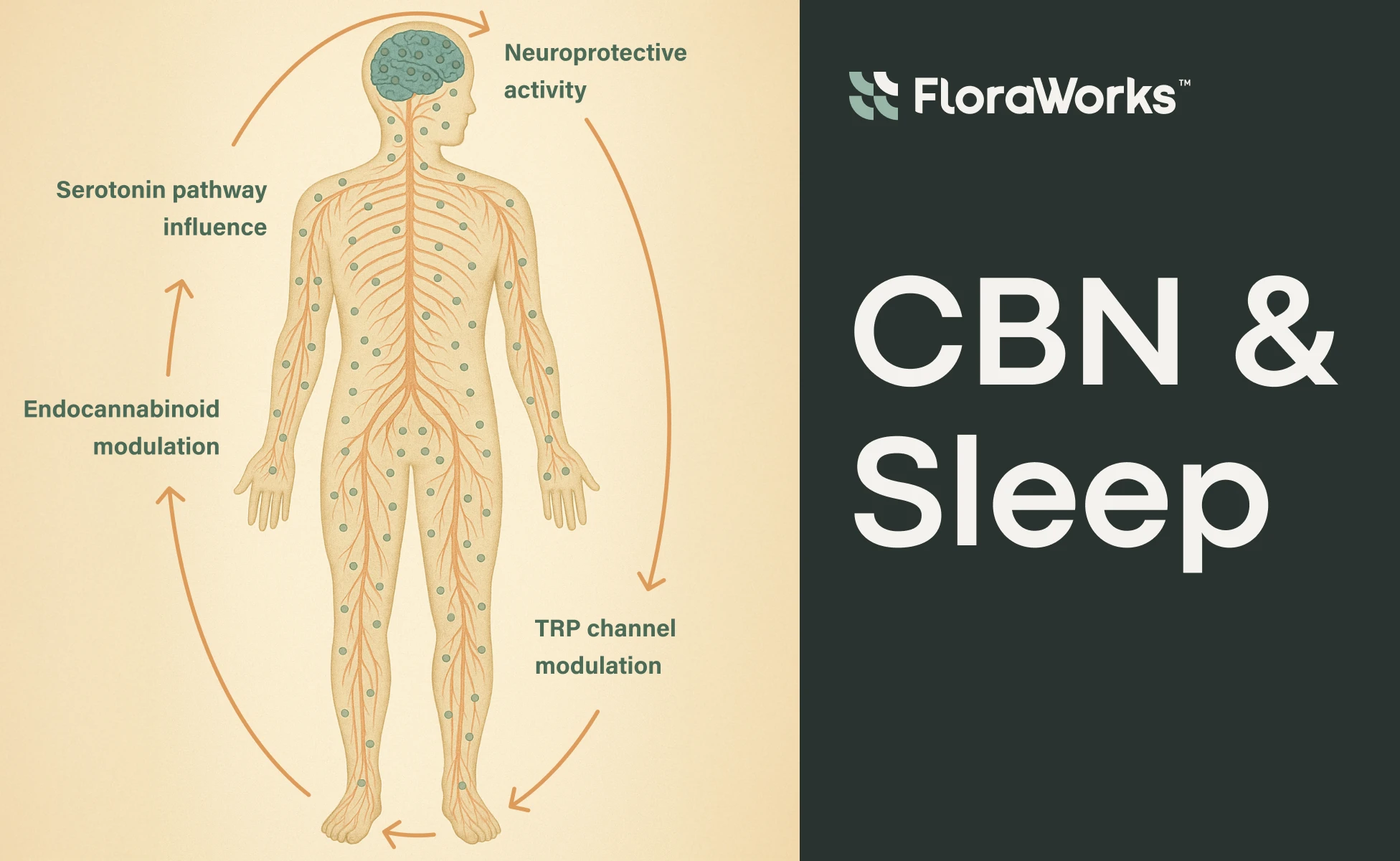
CBN's sleep-promoting effects stem from its unique receptor binding profile. Unlike THC, which acts as a full agonist at CB1 receptors, CBN functions as a partial agonist with significantly lower binding affinity. This reduced CB1 activity explains why CBN produces sedative effects without psychoactive impairment.
Research demonstrates that CBN binds to CB1 receptors with approximately 10-fold lower potency than THC. This weaker interaction means CBN can modulate the endocannabinoid system's sleep-regulating functions without triggering the euphoric or impairing effects associated with stronger CB1 activation.
At CB2 receptors, CBN shows moderate agonist activity. These receptors, primarily located in immune tissues, may contribute to CBN's potential anti-inflammatory effects. This dual receptor activity suggests CBN could address sleep disturbances related to both neurological and inflammatory processes.
The Orexin Connection: A Novel Sleep Pathway
Perhaps most intriguing is CBN's interaction with the orexin (hypocretin) system, a discovery that distinguishes it from traditional sleep aids. The orexin system serves as the brain's primary wakefulness network, with orexin neurons promoting alertness and arousal.
Functional interactions between CB1 and orexin-1 receptors have been identified, including potential receptor co-localization and dimerization. This cross-talk between cannabinoid and orexin systems offers a mechanistic explanation for CBN's ability to reduce arousal without the broad cortical suppression seen with conventional sedatives.
Unlike GABA-targeting compounds that force sedation, CBN's orexin modulation appears to work with natural sleep processes. This mechanism may explain why clinical studies show CBN improves sleep maintenance without disrupting sleep architecture or causing significant next-day impairment.
Beyond Cannabinoid Receptors: TRP Channel Activity
CBN also engages multiple transient receptor potential (TRP) channels, including TRPA1, TRPV1, TRPV2, and TRPV4. These non-selective cation channels play crucial roles in pain perception, temperature regulation, and circadian rhythm modulation.
TRP channel activation by CBN may contribute to its sleep benefits through several pathways. Pain reduction can eliminate a common cause of sleep disruption, while thermoregulatory effects may help maintain the body temperature changes necessary for healthy sleep cycles. Additionally, circadian rhythm support through peripheral TRP channels could enhance overall sleep-wake regulation.
Neuroprotective and Anti-Inflammatory Pathways
Emerging research suggests CBN provides neuroprotective benefits through antioxidant and anti-inflammatory mechanisms. Preclinical studies demonstrate that CBN reduces oxidative stress in neuronal mitochondria while limiting reactive oxygen species accumulation.
These protective effects may contribute to improved sleep quality by stabilizing neuronal excitability and synaptic function. CBN also modulates microglial activation and reduces pro-inflammatory cytokine expression in central nervous system tissues, potentially benefiting individuals whose sleep disturbances relate to neuroinflammation.
Clinical Validation: From Theory to Evidence
The TruCBN™ Breakthrough
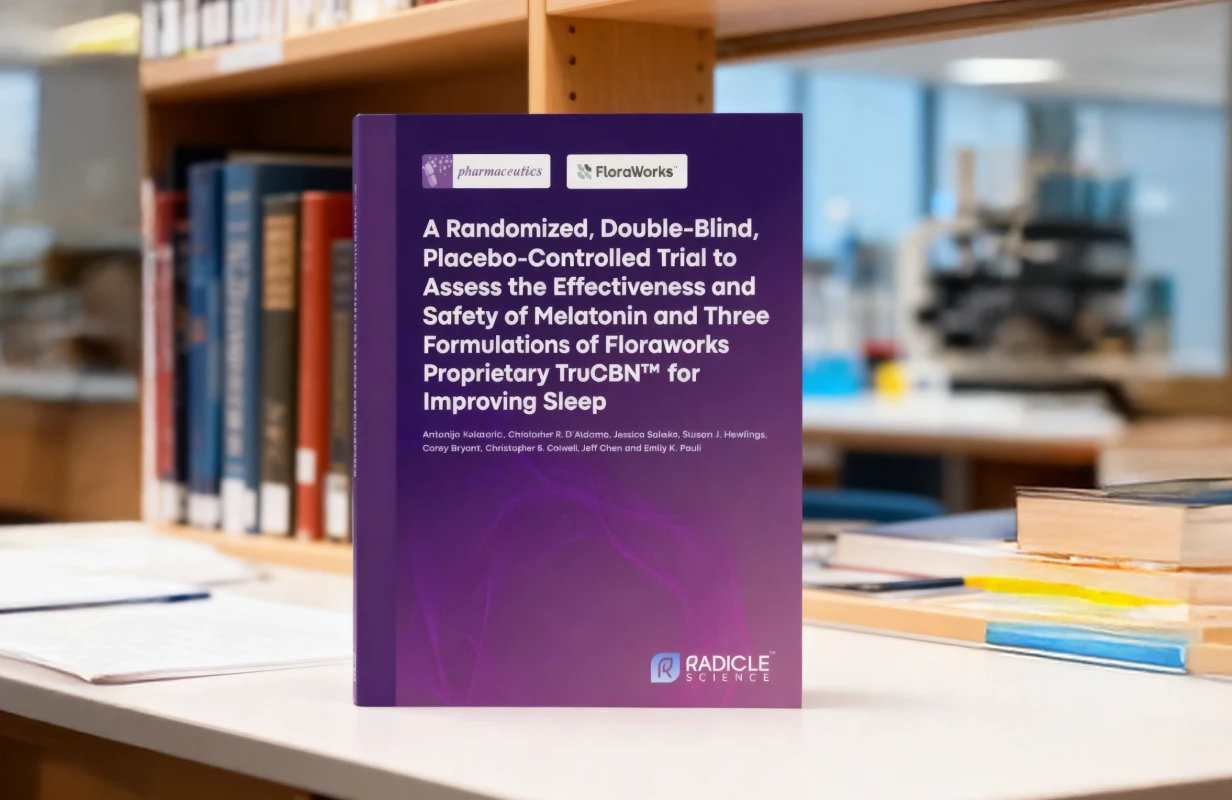
TruCBN™ represents the culmination of decades of CBN research, backed by the first large-scale clinical trials to demonstrate CBN's sleep benefits. The landmark study by Kolobaric et al. (2024) tested three TruCBN™ doses (25mg, 50mg, 100mg) against placebo and melatonin in 1,793 adults with sleep disturbance.
All TruCBN™ doses produced significant improvements in sleep quality compared to placebo, with efficacy comparable to 4mg melatonin. Importantly, the study found no clear dose-response relationship, suggesting that 25mg provides near-maximal benefits for most users. This finding has important implications for formulation strategies and cost optimization.
Sleep Maintenance vs. Sleep Initiation
Clinical data consistently demonstrates CBN's particular strength lies in sleep maintenance rather than sleep initiation. Studies show CBN significantly reduces nighttime awakenings and improves overall sleep disturbance scores, but produces minimal effects on sleep onset latency.
This sleep maintenance profile aligns perfectly with CBN's proposed mechanisms. Orexin system modulation would be expected to reduce mid-sleep arousal rather than accelerate sleep onset, while TRP channel effects on pain and temperature regulation would primarily benefit sleep continuity.
For supplement manufacturers, this mechanistic understanding provides clear positioning guidance. CBN-based products are best marketed for sleep maintenance and sleep quality rather than as sleep onset aids, differentiating them from melatonin-based formulations.
Pharmacological Distinctions: CBN vs. Other Cannabinoids
CBN vs. THC: Non-Intoxicating Sleep Support
The fundamental difference between CBN and THC lies in their CB1 receptor interactions. While THC's high CB1 affinity produces intoxication alongside sleep effects, CBN's partial agonism delivers sedation without psychoactive impairment.
THC's biphasic sleep effects can actually disrupt sleep architecture, particularly REM sleep, with chronic use leading to tolerance and rebound insomnia. CBN avoids these complications through its gentler receptor interactions and multi-target mechanisms.
CBN vs. CBD: Consistent Sedative Profile
CBD's relationship with sleep remains complex and dose-dependent. Some studies report alerting effects at certain doses, while others show mild sedative properties. This inconsistency reflects CBD's complex pharmacology, including CB1 antagonism and multiple off-target effects.
CBN demonstrates more predictable sedative activity across studied doses, likely due to its partial CB1 agonism and orexin interactions. For formulators seeking consistent sleep benefits, CBN offers greater reliability than CBD.
The Science Behind TruCBN™'s Clinical Success
Manufacturing and Purity Advantages
TruCBN™'s clinical validation reflects not just CBN's inherent properties, but also the importance of manufacturing quality and purity. The controlled synthesis process ensures consistent cannabinoid profiles and eliminates potentially interfering compounds.
Batch-to-batch consistency becomes crucial when translating research findings into commercial products. TruCBN™'s pharmaceutical-grade manufacturing ensures that clinical trial results translate reliably to finished products.
Bioavailability and Formulation Considerations
CBN's lipophilic properties require careful attention to bioavailability in supplement formulations. TruCBN™'s clinical studies used softgel delivery systems that optimize absorption and provide consistent plasma levels.
Understanding these pharmacokinetic factors helps explain why some CBN products may fail to deliver expected benefits despite containing adequate amounts of the compound. Proper formulation becomes as important as the ingredient itself.
Key Takeaways: CBN Mechanisms and Clinical Applications
Understanding how CBN works provides supplement manufacturers with critical insights for product development:
✓ Multi-target mechanism through CB1/CB2 receptors, orexin system, and TRP channels
✓ Sleep maintenance focus rather than sleep initiation
✓ Non-intoxicating profile due to partial CB1 agonism
✓ Clinical validation through TruCBN™ randomized controlled trials
✓ Consistent efficacy across 25-100mg dose range
✓ Formulation considerations critical for bioavailability
Research Gaps and Future Directions
Mechanistic Validation Needs
While preclinical research strongly supports CBN's multi-target mechanisms, human studies validating these pathways remain limited. Ongoing polysomnography studies like the CUPID trial will provide objective confirmation of CBN's sleep architecture effects.
Biomarker research could further validate CBN's mechanisms by measuring orexin levels, inflammatory markers, and other relevant parameters in clinical studies. Such data would strengthen both regulatory submissions and marketing claims.
Population-Specific Research
Current clinical data primarily comes from healthy adults with mild sleep complaints. Research in diagnosed insomnia disorder, elderly populations, and those with comorbid conditions will expand CBN's clinical utility and market applications.
Long-term safety studies will also support regulatory advancement and address any concerns about chronic CBN use, particularly important for dietary supplement applications.
The Evolution from Folklore to Clinical Reality
CBN's journey from cannabis folklore to clinical validation illustrates the importance of rigorous scientific investigation. What began as anecdotal observations about aged cannabis has evolved into a sophisticated understanding of multi-target sleep mechanisms.
TruCBN™ represents the culmination of this scientific evolution, providing supplement manufacturers with a clinically validated ingredient backed by peer-reviewed research. Understanding how CBN works—from its cannabinoid receptor interactions to its novel orexin pathway modulation—enables informed formulation decisions and evidence-based marketing.
The transition from theoretical benefits to clinical proof positions CBN as a legitimate player in the sleep supplement market, offering manufacturers a scientifically differentiated ingredient for an increasingly sophisticated consumer base.
Frequently Asked Questions: CBN Mechanisms and Applications
How does CBN work differently from other sleep ingredients?
CBN works through multiple unique mechanisms that distinguish it from traditional sleep aids. Unlike melatonin, which primarily regulates circadian timing through MT1/MT2 receptors, CBN modulates the endocannabinoid system and orexin pathways to reduce arousal and promote sleep maintenance. This multi-target approach provides consistent sedative effects without disrupting natural sleep architecture.
What is the orexin system and why is CBN's interaction important?
The orexin (hypocretin) system is the brain's primary wakefulness network. Orexin neurons promote alertness and arousal, and their overactivity can cause sleep maintenance problems. CBN's interaction with orexin receptors through CB1-orexin cross-talk represents a novel mechanism for reducing arousal without the broad cortical suppression seen with GABA-targeting sedatives like benzodiazepines.
Why does CBN help with sleep maintenance but not sleep onset?
CBN's mechanism profile explains its sleep maintenance benefits. The orexin system modulation reduces mid-sleep arousal, while TRP channel effects on pain and temperature regulation help maintain sleep continuity. These mechanisms are more relevant to staying asleep than falling asleep initially, which explains why clinical studies show minimal effects on sleep onset latency.
How is CBN different from THC in terms of sleep effects?
CBN and THC differ fundamentally in their CB1 receptor interactions. THC acts as a full CB1 agonist with high binding affinity, causing intoxication and potentially disruptive biphasic sleep effects. CBN functions as a partial CB1 agonist with 10-fold lower potency, delivering sedative benefits without psychoactive impairment or the tolerance issues associated with chronic THC use.
What makes TruCBN™ different from other CBN ingredients?
TruCBN™ is the only CBN ingredient with published clinical trial data. The randomized controlled trial in 1,793 participants demonstrated efficacy comparable to melatonin with excellent safety. Additionally, TruCBN™'s pharmaceutical-grade manufacturing ensures batch-to-batch consistency that translates clinical trial results into reliable commercial products.
What are the optimal doses for CBN based on clinical research?
Clinical studies show 25-100mg TruCBN™ produces significant sleep improvements with no clear dose-response relationship. This means 25mg provides near-maximal benefits for most users, offering formulation flexibility and cost optimization opportunities. The lack of dose escalation also suggests no tolerance development with consistent use.
How does CBN's lipophilic nature affect formulation strategies?
CBN's lipophilic properties require careful attention to bioavailability. TruCBN™'s clinical studies used softgel delivery systems that optimize absorption through lipid matrices. Proper formulation becomes as important as ingredient quality because poor bioavailability can prevent even high-quality CBN from delivering expected benefits.
What TRP channels does CBN interact with and why does this matter?
CBN engages TRPA1, TRPV1, TRPV2, and TRPV4 channels involved in pain perception, temperature regulation, and circadian rhythm modulation. These interactions may contribute to sleep benefits by reducing sleep-disrupting pain, supporting thermoregulatory changes necessary for healthy sleep cycles, and enhancing overall sleep-wake regulation through peripheral mechanisms.
How does CBN compare to CBD for sleep applications?
CBN demonstrates more predictable sedative activity than CBD across studied doses. CBD's relationship with sleep is complex and dose-dependent, with some studies reporting alerting effects. CBN's partial CB1 agonism and orexin interactions provide consistent sleep maintenance benefits, making it more reliable for sleep-focused formulations than CBD.
What research gaps remain for CBN sleep mechanisms?
Key research gaps include human validation of preclinical mechanisms, particularly orexin pathway interactions and biomarker studies. Ongoing polysomnography studies like the CUPID trial will provide objective sleep architecture data. Long-term safety studies and research in special populations (elderly, diagnosed insomnia) will expand clinical applications and support regulatory advancement.
How did CBN evolve from cannabis folklore to clinical validation?
CBN's journey began with observations that aged cannabis produces sedating effects. Early scientific studies in the 1970s-1980s were limited by small sample sizes and methodological issues. Modern advances in extraction technology, analytical methods, and endocannabinoid system understanding enabled rigorous clinical investigation, culminating in TruCBN™'s peer-reviewed clinical validation.
What makes CBN's mechanism unique compared to traditional sleep aids?
CBN's multi-target mechanism sets it apart from single-pathway sleep aids. While antihistamines block H1 receptors and benzodiazepines enhance GABA signaling, CBN modulates multiple systems simultaneously: cannabinoid receptors, orexin pathways, and TRP channels. This comprehensive approach may explain CBN's consistent efficacy without the tolerance or dependency issues of traditional sedatives.
Summary: CBN's Mechanistic Foundation for Sleep Applications
CBN's evolution from cannabis folklore to clinical validation demonstrates the power of rigorous scientific investigation. Understanding CBN's multi-target mechanisms—from cannabinoid receptor interactions to orexin system modulation—provides supplement manufacturers with clear rationale for product positioning and formulation strategies.
TruCBN™'s clinical validation represents a watershed moment in cannabinoid sleep research, offering the industry's first peer-reviewed evidence for CBN's sleep benefits. As research continues to validate these mechanisms in human studies, CBN is positioned to become a cornerstone ingredient in the next generation of science-based sleep supplements.
The transition from theoretical benefits to clinical proof establishes CBN as a legitimate therapeutic option backed by sophisticated pharmacological understanding and rigorous clinical validation.
For more information about FloraWorks' cannabinoid research and TruCBN™ specifications, manufacturers can access comprehensive technical documentation and regulatory support materials.