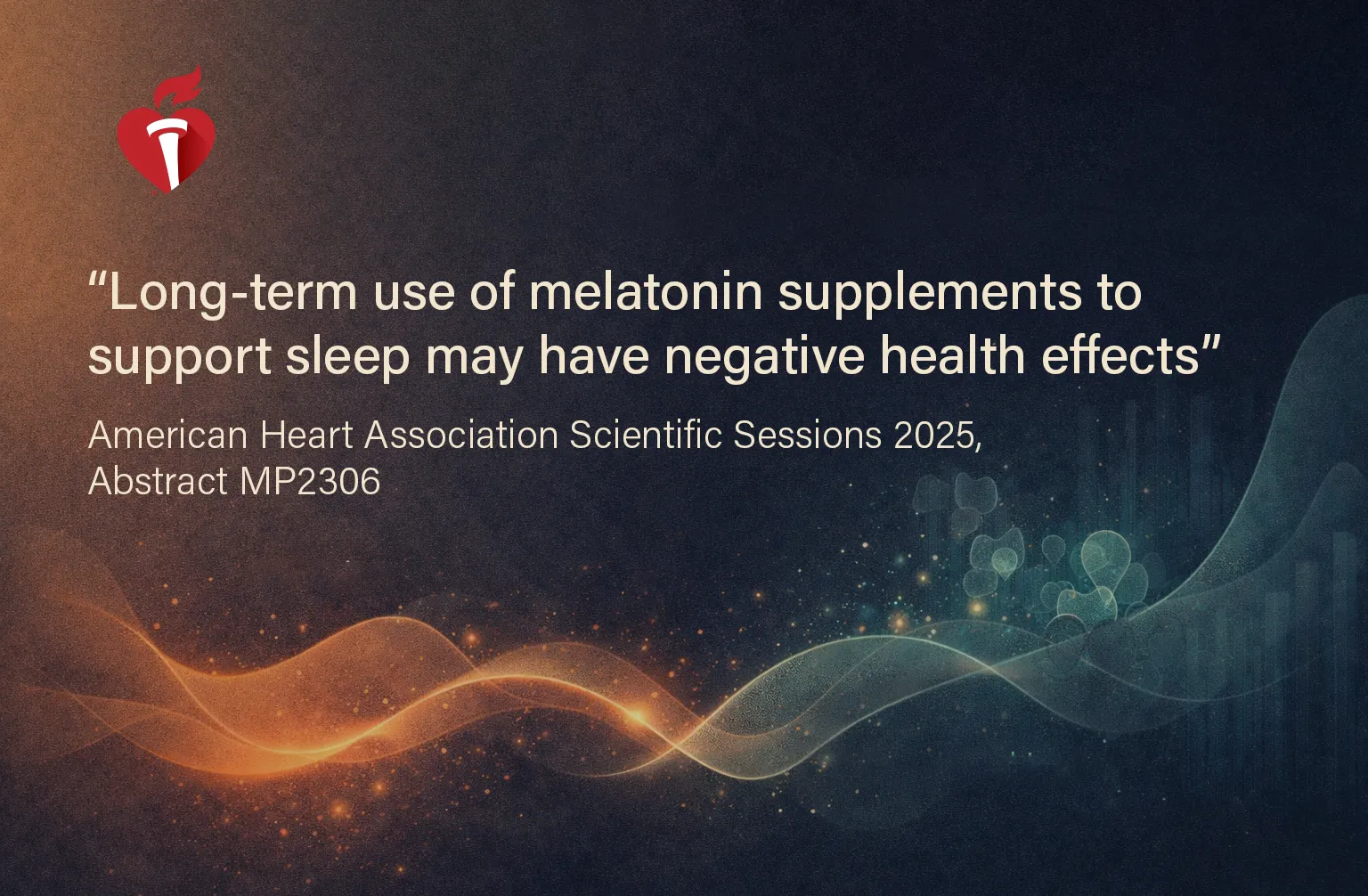
A major 2025 analysis presented at the American Heart Association (AHA) Scientific Sessions has fundamentally reshaped how the industry evaluates melatonin. In a five-year dataset of more than 130,000 adults with insomnia, chronic melatonin use was associated with a 90% higher likelihood of heart failure and nearly double all-cause mortality compared to non-users.
These findings reinforce what leading sleep and neuroscience experts have cautioned for years:
- Dr. Andrew Huberman, Stanford neuroscientist, advises that melatonin should be used very sparingly, primarily for jet lag, due to its hormonal effects, inconsistent dosing in supplements, and potential disruption of endocrine rhythms.
- Dr. Matthew Walker, one of the world’s foremost sleep scientists, notes that melatonin is a circadian timing molecule, not a true sleep-inducer — with research showing only modest reductions in sleep latency (~4 minutes) and negligible impact on sleep quality.
For supplement brands, these converging signals create both risk and opportunity: formulations reliant on melatonin are probably only appropriate for a more narrow scope of sleep disruption, while safer non-hormonal alternatives are gaining momentum to aid more general forms of sleep disruption facing the population.
The Melatonin Challenge
Melatonin’s popularity created a $2.8B global market by 2024, but most consumers were never informed of its limitations:
- Small effect on sleep onset and efficiency (Walker)
- Next-day grogginess and hormonal disruption
- Tolerance escalation and rebound insomnia
- Highly variable dosing across commercial products (Huberman)
The newly presented AHA findings heighten the urgency to reassess melatonin’s role in daily-use sleep products.
Why CBN Is Emerging as the Next-Generation Sleep Ingredient
Unlike melatonin’s hormonal pathway, CBN (cannabinol) supports sleep via endocannabinoid and adenosine mechanisms, which help regulate natural sleep pressure and sleep-wake cycles without altering endocrine function.
Clinical Evidence
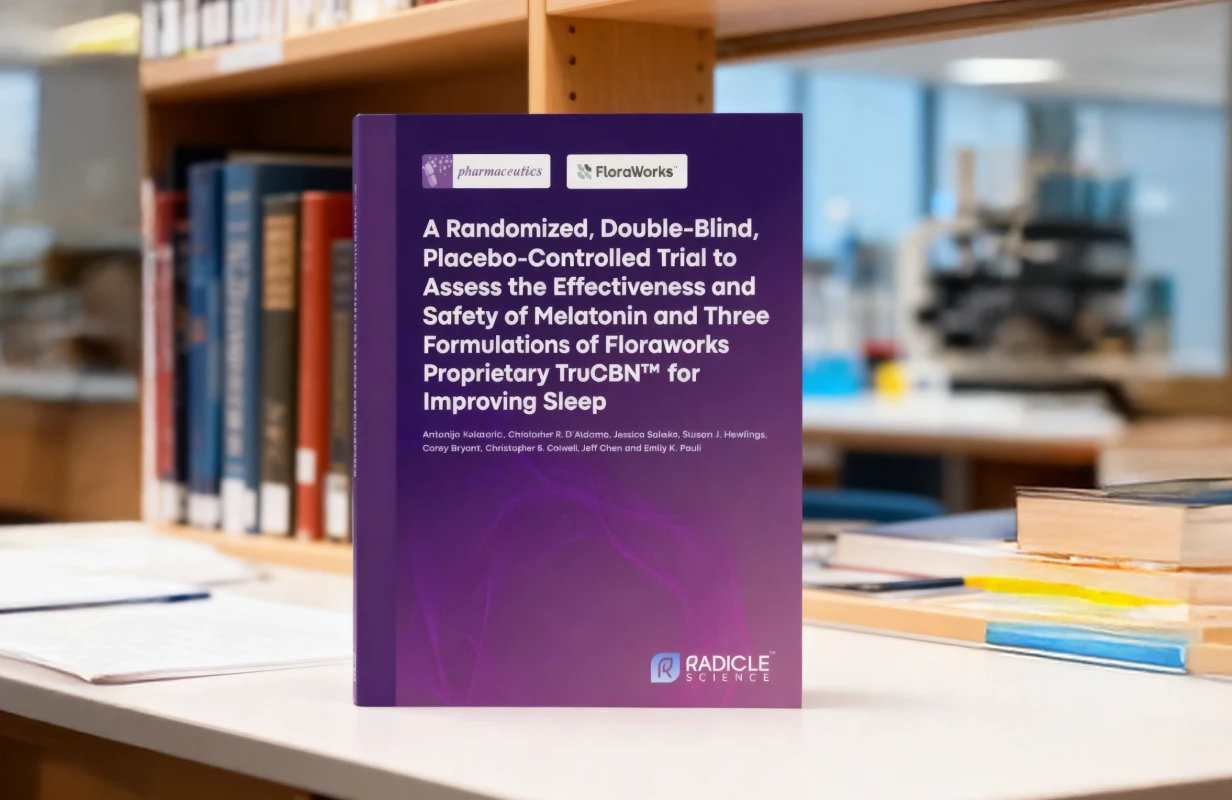
Recent randomized, double-blind, placebo-controlled trials demonstrate:
- Significant improvements in sleep quality (PROMIS-8A) at 25–50 mg
- Comparable benefits to melatonin with less next-day grogginess
- Significant stress reduction at higher doses
- Excellent safety profile with no cardiovascular, hormonal, or dependency concerns
Safety Validation
TruCBN™ is backed by a robust toxicology package:
- No genotoxicity (Eurofins In Vitro Micronucleus Assay)
- Well tolerated up to 200–400 mg/kg in 14-day oral toxicity studies in rats
- Non-intoxicating at sleep-relevant doses
This positions CBN as one of the most promising non-hormonal sleep actives entering mainstream use.
Why Experts Favor Non-Hormonal Sleep Solutions
Huberman and Walker consistently emphasize that:
- Daily sleep aids should avoid manipulating hormonal systems
- Long-term solutions should support natural sleep architecture
- Circadian alignment and adenosine-driven sleep pressure matter more than “knocking people out”
- Consumers increasingly want non-habit-forming, next-day-friendly ingredients
CBN aligns precisely with these principles.
Market Opportunity in the Post-Melatonin Landscape
Consumer awareness is shifting quickly:
- 73% of consumers care about long-term supplement safety
- Melatonin search volume for “alternatives” is rising
- Retailers are reallocating shelf space to non-hormonal sleep products
- Regulatory agencies worldwide are reassessing melatonin’s status
Brands that lead early on non-hormonal sleep solutions will capture outsized share of this transition.
Why TruCBN™ Gives Brands a Competitive Advantage
TruCBN™ offers:
- Peer-reviewed clinical evidence
- Full GLP toxicology and safety characterization
- A patented, high-efficiency CBN manufacturing process
- A clear regulatory path with GRAS submission planned for 2025
- Formulation versatility across gummies, softgels, tablets, powders, or beverages
This combination of science, safety, and scalability makes TruCBN™ one of the most ready-to-commercialize sleep ingredients of the coming decade.
Conclusion
The melatonin landscape has changed — permanently.
With the AHA identifying serious long-term associations and leading experts like Huberman and Walker advising extreme caution around daily use, the industry must evolve. CBN represents the future of sleep supplementation: Non-hormonal, clinically validated, well tolerated, and aligned with modern neuroscience.
Brands that act now will define the next era of sleep innovation.