
CBN Isolate vs Melatonin in Sleep Product Labeling
Learn how to formulate and label sleep aids while evaluating CBN isolate vs melatonin, including compliant claims and positioning for brand teams.
March 3, 2026
7 min read
Key takeaways
- Reviews that say “tastes great but didn’t notice much” point at dose, not at demanding customers.
- Milligrams per gummy tell only part of the story — bioavailability and the gummy matrix decide what actually lands.
- A carefully built lower-mg gummy can outperform a higher-mg one when the ingredient and matrix are tuned.
CBN gummies for sleep can look great on paper. The branding is clean, the flavor is on point, and the label shows what feels like a strong milligram callout. People try it, a few say they sleep better, some say it is fine, and a quiet group says nothing because they move on to something else.
That uneven feedback is not random. With minor cannabinoids, guessing at dose or copying CBD or THC norms often means you are underdelivering on actual sleep support, even when the number on the front of the jar looks “high.” The result is a product that seems promising, but does not give enough people the night-to-night help they hoped for.
Why CBN dosing is not a guessing game
CBN is its own thing. It is not CBD and it is not THC. THC is psychoactive, can shorten sleep onset for some, and at higher doses may disrupt normal sleep patterns. CBD is more about stress response and relaxation, which can set the stage for sleep but does not always move the needle on sleep quality by itself. CBN appears to support sleep through different receptor activity, lowering arousal through the CB1 and CB2 receptors, with a focus on subjective sleep quality, and it does this without THC-like intoxication.
Because these mechanisms are different, borrowing dose ranges from CBD or low-dose THC is risky. A milligram count that feels “safe” or “familiar” might simply be too weak to support the kind of sleep experience your label hints at. On top of that, “mg per gummy” tells only part of the story:
- Bioavailability changes how much actually reaches systemic circulation.
- The gummy matrix and how CBN is dispersed and stabilized affect consistency from piece to piece.
- Impurities or variable cannabinoid content can blur the real dose that consumers receive.
So two gummies with “10 mg CBN” on the label can feel very different at bedtime. This is where controlled human data matters. At FloraWorks, we ran a large randomized, controlled trial on TruCBN™ with over a thousand participants, focused on sleep-related outcomes and tolerability. That kind of data helps brands anchor dose ranges to real-world sleep support and next-day function, while staying inside clear safety margins instead of guessing or staying too conservative.
Consumer red flags that your gummies are too weak
Your customers will usually tell you what is happening, if you know how to listen. Some common red flags that point to underdosing include reviews that say “tastes great but didn’t notice much” or “helps a little if I take two or three,” support emails where people ask if it is OK to double or triple the labeled serving, and feedback like “works only on some nights” instead of “this changed my nights.”
When people consistently feel the need to stack servings, the single-gummy dose is probably below the effective range for many users.
Another sign is how often your label or FAQ leans on “take more if needed” as the core guidance. Flexible dosing has its place, but if that is the primary answer to performance concerns, the base formula likely needs a review.
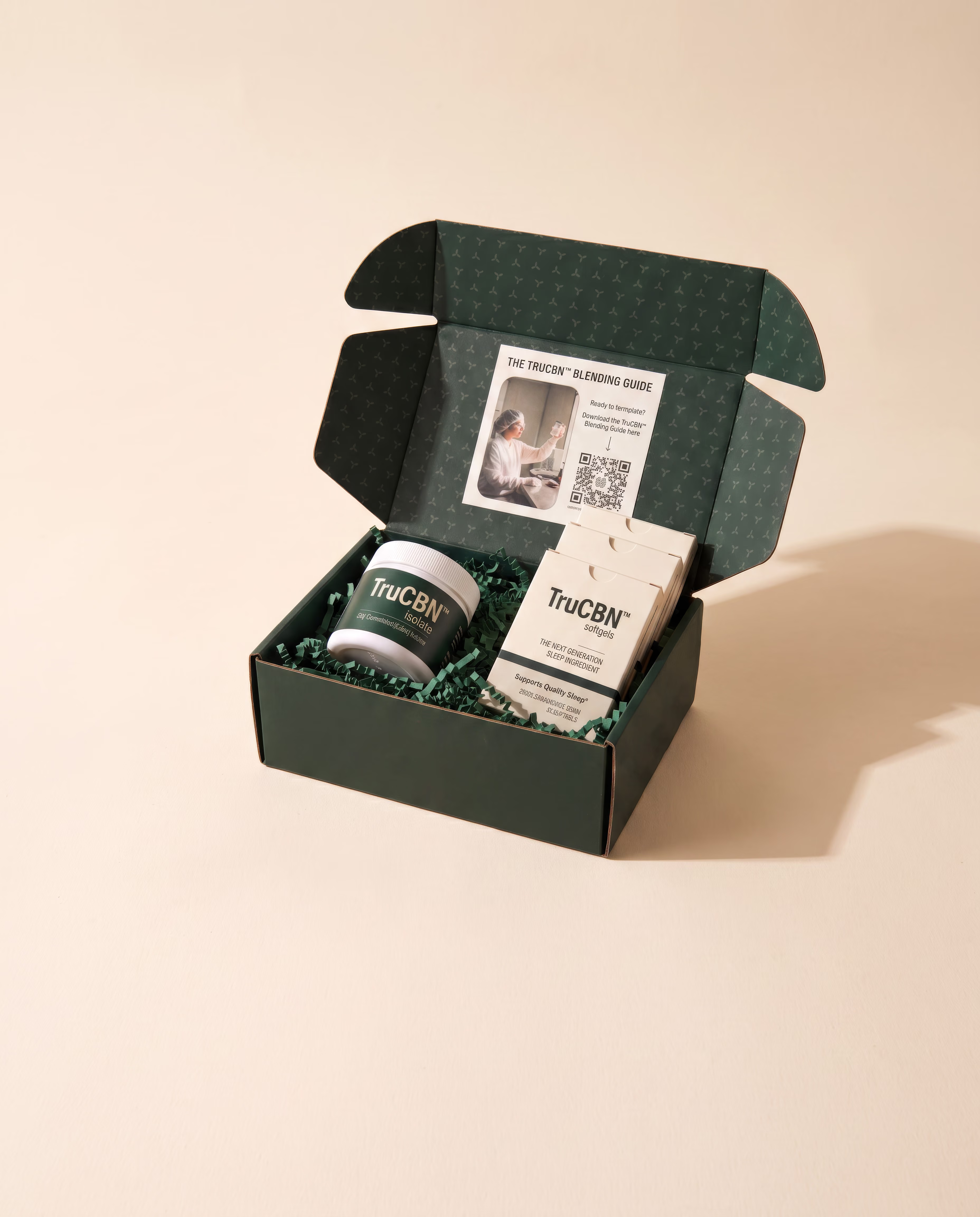
Test your dose against a clinically validated ingredient
Free TruCBN™ sample shipped to qualified brands for formulation and testing.
Request a TruCBN™ sampleData-driven signs in your product and sales metrics
You can also see dosing issues in your numbers, not just in your reviews. If first-time sales respond to marketing but second and third purchases trail off, people probably like the idea more than the actual effect. If customers keep moving to higher nighttime SKUs or stacking your gummies with other sleep-support products, the entry dose is likely not pulling its weight. And if you call it a primary sleep support but they use it as a mild relaxation treat before TV, the positioning and the dose have drifted apart.
That last one matters for brand trust. When the promise on the label, the sensory experience, and the dose are not aligned, people stop believing claims in this category. The goal is for your CBN gummy to feel like a reliable part of someone’s sleep toolkit, not just a nice-tasting extra.
How to right-size dosing without overstepping
Fixing underdosed CBN gummies for sleep is not about chasing the highest milligram number you can fit on a jar. It is about getting clear on who the product is for and how often they use it. Decide if it is for occasional “rescue” nights or everyday routines — those are different use cases, and dose ranges should reflect that. Ground your thinking in human data and safety work, not competitor labels.
Formulation details matter too. Pairing CBN with CBD, low or no THC, or other sleep-supporting actives can change the effective dose window. The gummy base, emulsifiers, and processing affect how consistently CBN is delivered. Timing guidance, like taking the gummy 30 to 60 minutes before bed, can be aligned with the expected onset from the specific matrix. A thoughtfully designed 5 to 10 mg CBN gummy, backed by this kind of work, can easily outperform a 20 mg product that is based only on milligram count.
Turning underperforming gummies into trusted sleep tools
If you suspect your CBN gummies for sleep are underdosing consumers, you do not need to scrap the whole line. Audit your reviews, customer service logs, and subscription data for the red flags above. Revisit your target use case and adjust dose ranges based on clinical and safety anchors. Evaluate your current CBN source, impurity profile, and how well it is integrated in your gummy base. Then run small in-market pilots with adjusted doses and formats before a full relaunch.
When your data or your gut keeps saying “people like it but do not feel much,” that is not a dead end. It is a signal that dosing is ready for an upgrade, and that your CBN gummies for sleep can move from “nice idea” to “trusted part of the night” for the people you serve.
- Why CBN dosing is not a guessing game
- Consumer red flags
- Signs in your metrics
- Right-sizing the dose
- Turning it around
