How TruCBN™ Compares to Traditional Sleep Aids
Executive summary
Most sleep products sit in familiar categories: melatonin, sedating antihistamines, herbal blends, magnesium, and prescription hypnotics. They can help, but each comes with trade‑offs around next‑day grogginess, hormone signaling, anticholinergic burden, or dependence.
TruCBN™ is different. It is a non‑hormonal, non‑intoxicating cannabinoid sleep ingredient with:
- Randomized, double‑blind, placebo‑controlled human data in adults with sleep disturbance
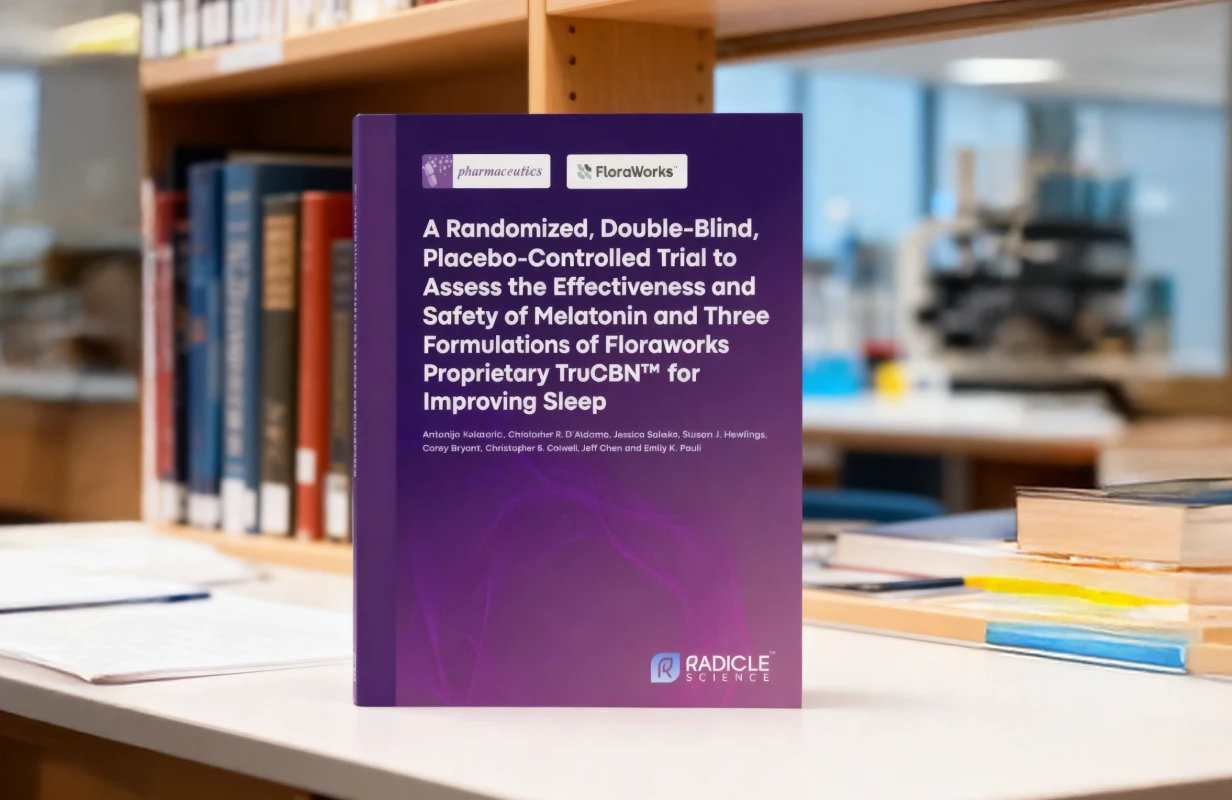
- A head‑to‑head clinical trial against melatonin
- A mechanism tuned to sleep maintenance and nighttime awakenings, not just knocking people out
This article walks through how TruCBN™ compares to traditional sleep aids in terms of:
- Mechanism of action
- Efficacy signal
- Safety and tolerability
- Product positioning and consumer expectations
For deeper dives, see FloraWorks’ own pieces:
- Post‑Melatonin Sleep Solutions: How CBN Is Redefining Rest
- CBN vs. Melatonin: What Supplement Brands Should Know About Sleep Quality and Next‑Day Alertness
- TruCBN™ ingredient overview
Key points
- TruCBN™ performs comparably to melatonin in a clinical trial.
In a randomized, double-blind, placebo-controlled study, nightly TruCBN™ (25, 50, or 100 mg) and 4 mg melatonin each significantly improved self-reported sleep disturbance versus placebo over four weeks, with no statistically significant difference in overall effect size between active groups.Pharmaceuticals trial - TruCBN™ focuses on sleep maintenance, not just sleep onset.
Emerging clinical data suggest CBN’s effects are more pronounced on sleep continuity and nighttime awakenings than on sleep onset latency. This profile is mechanistically consistent with modulation of endocannabinoid pathways involved in arousal regulation, rather than melatonin receptor signaling.
Bonn‑Miller et al.; Kesner & Lovinger - Non‑intoxicating at studied doses.
Across published trials of CBN and TruCBN™, including doses from 20–100 mg nightly (and single-dose protocols up to 300 mg), participants did not report THC-like intoxication or euphoria. Short-term data show no signals of abuse-type behaviors or withdrawal phenomena.
Bonn‑Miller et al.; Lavender et al., CUPID protocol - Different risk profile than antihistamines and prescription hypnotics.
Sedating antihistamines and benzodiazepine-like agents act through H1 blockade or GABA-A modulation and are associated with anticholinergic effects, tolerance, and next-day impairment. In contrast, TruCBN™ does not act through these pathways and has demonstrated mostly mild, transient side effects (e.g., grogginess, vivid dreams) in controlled trials up to four weeks.Velzeboer et al., Sleep; AminiLari et al., Sleep - More standardized than most herbal sleep aids.
Unlike multi-herb sleep blends with variable active content, TruCBN™ is a single-molecule, ultra-pure cannabinoid manufactured under GMP/ISO systems. The same ingredient supplied to brand partners has been evaluated in peer-reviewed clinical research.
FloraWorks quality overview: flora-works.com
With that frame in place, we can look more closely at the comparisons that matter most to formulators and brand teams.
The starting point: what consumers use today
Most consumers trying to sleep better reach for one of a few well-known options. Here’s how the scientific evidence generally stacks up:
Melatonin: Used for falling asleep faster or managing jet lag.
Evidence: Melatonin is well supported for circadian rhythm disorders such as delayed sleep phase and jet lag. Meta-analyses show modest reductions in sleep onset latency; effects on sleep maintenance are less consistent in chronic insomnia. It is generally safe short-term, though next-day grogginess and vivid dreams are reported in some users.
Sedating Antihistamines (e.g., diphenhydramine, doxylamine)
Evidence: These agents reliably induce short-term drowsiness by blocking H1 receptors. However, clinical guidelines increasingly discourage chronic use due to tolerance, anticholinergic burden, next-day impairment, and potential long-term cognitive concerns with sustained high use. They are effective as acute sedatives; they are not considered ideal long-term insomnia therapies.
Herbal Blends (valerian, chamomile, passionflower, lemon balm)
Evidence: Clinical data are mixed. Some small randomized trials suggest mild improvements in sleep quality, but systematic reviews note heterogeneity in formulations, dosing, and study quality. Batch variability and lack of standardization remain ongoing challenges in the category.
Magnesium and Other Nutrients
Evidence: Magnesium may modestly improve sleep quality, particularly in individuals with low magnesium status or elevated stress. Effects tend to be subtle rather than hypnotic. Overall safety profile is favorable at nutritional doses.
Prescription Hypnotics (benzodiazepines, Z-drugs like zolpidem)
Evidence: These medications are highly effective for short-term insomnia management. However, long-term use is associated with tolerance, dependence, rebound insomnia, and increased risk of falls and cognitive impairment in older adults. Clinical guidelines generally recommend time-limited use.
Cannabis Products (THC, CBD, Mixed Ratios)
Evidence: Cannabinoids show modest benefits for sleep in certain populations, particularly when pain or hyperarousal are present. THC can reduce sleep onset latency but may disrupt REM sleep and carries intoxication and tolerance risks. Evidence for CBD and minor cannabinoids remains early and heterogeneous; high-quality, controlled data are still emerging.
Clinical reviews highlight that many of these tools help in the short term, but chronic insomnia and sleep maintenance issues are still poorly served. A widely cited review in Chest notes that cannabinoids are increasingly used in this gap, particularly when pain or hyperarousal drive nighttime awakenings.
TruCBN™ is positioned squarely in this space: a non‑intoxicating cannabinoid ingredient built for regulated, melatonin‑free sleep products.
Mechanisms: how TruCBN™ works vs common sleep aids
TruCBN™: a sleep‑maintenance‑oriented cannabinoid
Cannabinol (CBN), the active molecule in TruCBN™, is an oxidized metabolite of THC that behaves very differently from its parent compound. It acts as a partial agonist at both CB1 and CB2 receptors, but with much lower CB1 potency than THC, which is a key reason it does not produce intoxication at clinically studied doses. (Kesner & Lovinger; Maioli et al.)
Beyond the endocannabinoid system, CBN also engages TRP channels (TRPA1, TRPV1, TRPV2, TRPV4), which are involved in pain signaling, thermoregulation, and circadian processes. There is also emerging preclinical evidence for interactions with the orexin system, the brain's primary regulator of wakefulness and arousal. (Kim et al.)
This multi‑target profile is what makes TruCBN™ especially relevant for sleep maintenance. CB1/CB2 modulation may help dampen hyperarousal and stabilize sleep architecture. TRP channel activity can influence pain and body temperature, two of the most common reasons people wake up in the middle of the night. And orexin involvement fits with reducing nighttime wakefulness rather than simply speeding up sleep onset. FloraWorks' articles on post‑melatonin sleep solutions and CBN vs melatonin expand on these points for brand audiences.
Melatonin: circadian timing, not sleep continuity
Melatonin is a hormone produced by the pineal gland that acts primarily at MT1/MT2 receptors to shift the body's circadian clock. It is strongest for helping people fall asleep when their internal timing is off, such as in jet lag, shift work, or delayed sleep phase, and American Academy of Sleep Medicine–aligned guidance emphasizes this timing‑focused role. (https://jcsm.aasm.org/doi/10.5664/jcsm.11212)
Where melatonin is more variable is in chronic sleep maintenance and non‑circadian insomnia, the kinds of problems where people fall asleep fine but wake repeatedly through the night. Compared with melatonin, TruCBN™ is non‑hormonal and targets arousal and sleep continuity more than clock‑shifting, which makes it a natural melatonin‑free option for brands responding to growing consumer hesitation about taking a hormone every night.
Sedating antihistamines: blunt sedation with baggage
Sedating antihistamines like diphenhydramine and doxylamine work by blocking H1 histamine receptors to cause drowsiness. They are effective in the short term, but they come with anticholinergic effects that can impair cognition, especially with chronic use and in older adults. Over time, people often develop tolerance to the sedative effects, leading to dose escalation. Next‑day grogginess, slowed reaction times, and potential long‑term cognitive risks are also well documented. Contemporary sleep medicine sources increasingly discourage them for chronic insomnia, even though they remain among the most common OTC sleep ingredients. (Velzeboer et al., Sleep)
TruCBN™ does not work through H1 receptors or strong GABAergic pathways and has not been associated with anticholinergic symptoms in clinical trials. Its intent is gentle arousal modulation, not blunt sedation.
Benzodiazepines and Z‑drugs: effective but risky
Prescription hypnotics such as benzodiazepines and Z‑drugs like zolpidem are strong GABA‑A modulators that reliably induce sleep. They are effective for short‑term insomnia when used carefully, but they carry well‑documented risks of tolerance, dependence, rebound insomnia when stopped, and falls and cognitive impairment, particularly in older adults. Guidelines summarized in the Chest review and other consensus documents now recommend cautious, time‑limited use. (Lavender et al., Chest)
TruCBN™ is not a hypnotic in this sense. It does not produce rapid, forced sedation via GABA. There is no evidence of dependence or withdrawal phenomena in current short‑term data. And its goal is sleep quality and continuity rather than "lights‑out" sedation.
Herbals and magnesium: softer tools, variable evidence
Herbal sleep aids such as valerian, chamomile, passionflower, and lemon balm may have mild GABAergic or anxiolytic effects, but they often suffer from variability in active constituents, quality control issues, and mixed results in clinical trials. Magnesium supports nervous system regulation and muscle relaxation, and shows modest sleep benefits, particularly in people who are deficient. It is generally safe, but it is not a dedicated hypnotic ingredient.
TruCBN™'s advantage here is standardization and focus. It is a defined, single active molecule with clear analytical specifications, published clinical data, and a sleep‑focused mechanism. Those attributes are detailed on flora-works.com/trucbn and supported by FloraWorks' GMP/ISO quality systems.
Efficacy: how does TruCBN™ measure up?
TruCBN™ vs melatonin in a clinical trial
The clearest comparison comes from a randomized, double‑blind, placebo‑controlled study published in Pharmaceuticals. Adults with self‑reported sleep disturbance were randomized to TruCBN™ at 25, 50, or 100 mg nightly, 4 mg melatonin, or placebo for four weeks. All three TruCBN™ doses and the melatonin arm significantly improved PROMIS Sleep Disturbance scores compared with placebo, and there were no significant differences in the magnitude of improvement between TruCBN™ and melatonin. All active arms also showed similar tolerability profiles. (Pharmaceuticals; PubMed)
From an efficacy standpoint, this means TruCBN™ performs on par with melatonin on a validated sleep disturbance metric, while offering a non‑hormonal alternative. FloraWorks' CBN vs. melatonin article discusses the implications for brands in more detail.
CBN and sleep maintenance vs onset
Other CBN trials reinforce a sleep‑maintenance focus. In a double‑blind, placebo‑controlled study, Bonn‑Miller and colleagues gave adults with poor sleep quality 20 mg CBN, 20 mg CBN plus CBD, or placebo for seven nights. CBN, with or without CBD, reduced nighttime awakenings and improved overall sleep disturbance relative to placebo, but there was little effect on sleep onset latency. No THC‑like intoxication was reported, and side effects were mild. (PubMed)
This pattern lines up with the mechanistic picture. CBN and TruCBN™ are best understood as sleep continuity ingredients, not "fall asleep faster" tools. That insight is central to FloraWorks' narrative in Post‑Melatonin Sleep Solutions, which emphasizes staying asleep and waking clear‑headed as the new consumer benchmark.
Cannabinoids vs other approaches in reviews
Systematic reviews of cannabinoids and sleep, such as those by Velzeboer et al. and AminiLari et al. in Sleep, paint a consistent picture. Cannabinoids show modest but real benefits for sleep, particularly in people with pain and hyperarousal. THC is more likely to cause intoxication, tolerance, and REM disruption, while non‑intoxicating cannabinoids, including CBN, are emerging as safer and more sustainable options, though long‑term data remain limited. (Velzeboer et al.; AminiLari et al.)
TruCBN™ leverages this shift by providing a standardized, clinically tested CBN that can be used without the regulatory and safety concerns of THC.
Safety and tolerability: how TruCBN™ differs from traditional options
Compared with melatonin
In the TruCBN™ vs melatonin trial, adverse events were mostly mild and transient, such as grogginess or vivid dreams. Overall adverse event rates were similar across TruCBN™, melatonin, and placebo arms, and no serious treatment‑related events were reported. In practice, this means TruCBN™ offers a safety and tolerability profile broadly similar to melatonin, with the key difference that it is non‑hormonal and non‑intoxicating. This contrast is explored more directly in CBN vs. Melatonin: What Supplement Brands Should Know About Sleep Quality and Next‑Day Alertness.
Compared with sedating antihistamines
Sedating antihistamines frequently cause hangover‑like grogginess, dry mouth, constipation, and urinary retention. They also raise tolerance issues that lead people to escalate doses, and are increasingly linked to cognitive concerns in long‑term, high‑use scenarios. By contrast, CBN and TruCBN™ studies do not report anticholinergic symptoms, show no signal of escalating dose requirements within trial windows, and have not produced serious treatment‑related adverse events at standard doses. While head‑to‑head trials vs antihistamines are not yet available, current evidence supports TruCBN™ as a cleaner, more targeted alternative for brands that want to avoid anticholinergic baggage.
Compared with benzodiazepines and Z‑drugs
Prescription hypnotics are powerful and effective but carry well‑documented risks of dependence, withdrawal, rebound insomnia, and cognitive and psychomotor impairment. TruCBN™ is not positioned as a replacement for prescription treatment of severe insomnia. What it does offer is an option for over‑the‑counter and supplement‑space products seeking a non‑addictive, non‑GABAergic approach. So far, published short‑term data show no signs of dependence or withdrawal‑type phenomena with TruCBN™.
Compared with herbals and magnesium
Herbals and magnesium are generally safe, but their clinical benefits are often small and inconsistent, and product quality and active content vary widely between brands and lots. TruCBN™ stands apart as a single, well‑characterized molecule whose clinical results can be tied directly to the ingredient FloraWorks supplies through its bulk cannabinoids program. R&D teams looking to work with the exact clinical‑grade material can start with the Rapid Formulation Kit.
Frequently asked questions: TruCBN™ vs traditional sleep aids
Is TruCBN™ stronger than melatonin?
In a head‑to‑head clinical trial, TruCBN™ (25–100 mg) and 4 mg melatonin produced similar improvements in self‑reported sleep disturbance vs placebo. It is accurate to say they performed comparably, with TruCBN™ offering a non‑hormonal alternative.
Pharmaceuticals trial
Does TruCBN™ help you fall asleep faster?
Current data suggest CBN and TruCBN™ are more effective for sleep maintenance (reducing awakenings, improving overall sleep disturbance) than for sleep onset latency. That’s different from melatonin, which is more about shifting circadian timing and helping people fall asleep.
Bonn‑Miller et al.
Is TruCBN™ safer than sedating antihistamines?
TruCBN™ and sedating antihistamines have not been directly compared in trials. However, antihistamines are known for anticholinergic side effects and next‑day impairment, while TruCBN™ trials report mostly mild, transient side effectsand no serious treatment‑related events at studied doses. Reviews in Sleep provide more detail on antihistamine risks.
Velzeboer et al.
Can TruCBN™ replace prescription sleep medications?
TruCBN™ is designed for over‑the‑counter and supplement‑space formulations, not as a one‑for‑one replacement for prescription hypnotics. It offers a non‑intoxicating, non‑addictive option for people with mild to moderate sleep disturbance, but individuals with severe or complex insomnia should work with a clinician.
How should brands position TruCBN™ alongside existing products?
Most brands use TruCBN™ to:
- Create melatonin‑free SKUs for customers worried about hormones
- Upgrade from antihistamine‑based “PM” products to a cleaner, next‑day‑friendly profile
- Differentiate in a crowded category with a clinically validated, cannabinoid‑based sleep maintenance ingredient
Articles like Post‑Melatonin Sleep Solutions and CBN vs. Melatonin outline real examples of these positioning strategies.
Summary
TruCBN™ sits at an intersection that traditional sleep aids have struggled to reach:
- It performs comparably to melatonin on validated sleep disturbance measures, without being a hormone.
- It focuses on sleep maintenance and continuity, where antihistamines, melatonin, and many herbals often fall short.
- It is non‑intoxicating at clinically studied doses, distancing it from THC‑containing products and sedative‑hypnotics.
- It is a standardized, single‑molecule ingredient with clinical backing, which is rare in the cannabinoid sleep space.
For brands, the choice is no longer just “melatonin vs something weaker,” or “effective vs safe.” With TruCBN™, there is now a third path: a science‑driven, non‑hormonal, non‑intoxicating sleep ingredient that holds its own against traditional aids while aligning with where the sleep market is headed.
Further reading and resources: