Executive summary
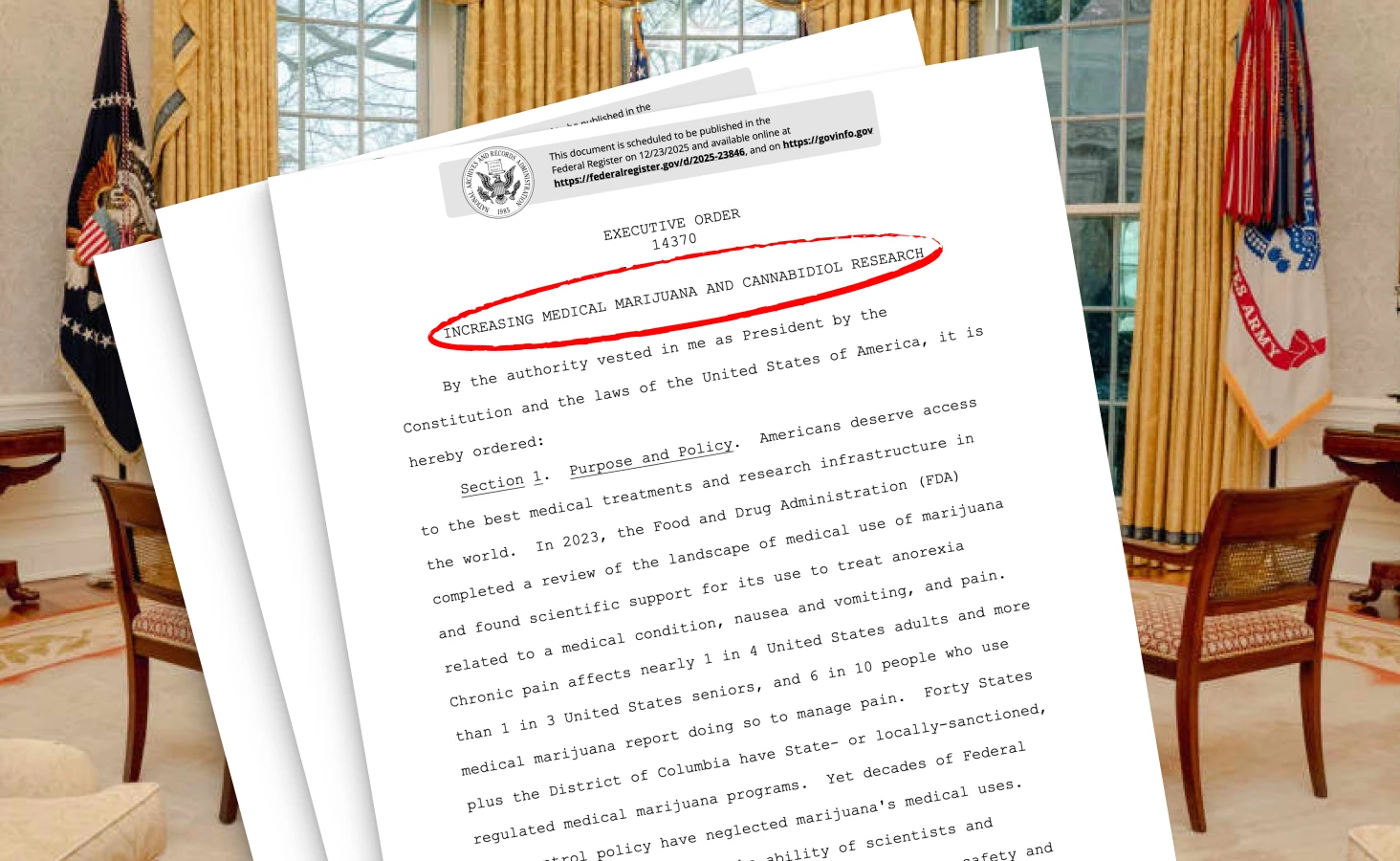
On December 18, 2025, the White House issued an Executive Order titled “Increasing Medical Marijuana and Cannabidiol Research”.
For the cannabis and hemp‑derived cannabinoid industry, it does two important things at once:
- It pushes the Attorney General to complete the process of moving marijuana to Schedule III.
- It instructs HHS, FDA, CMS, and NIH to build research methods and real‑world evidence models to “improve access to hemp‑derived cannabinoid products in accordance with Federal law and to inform standards of care.”
That second piece is the one that matters most for FloraWorks and TruCBN™. It signals a shift from a loose, product‑first market to a data‑first, standards‑driven ecosystem. Companies that can pair high‑quality ingredients with clinical trials, GLP‑style toxicology, and real‑world data infrastructure will be the ones that get invited into the next phase.
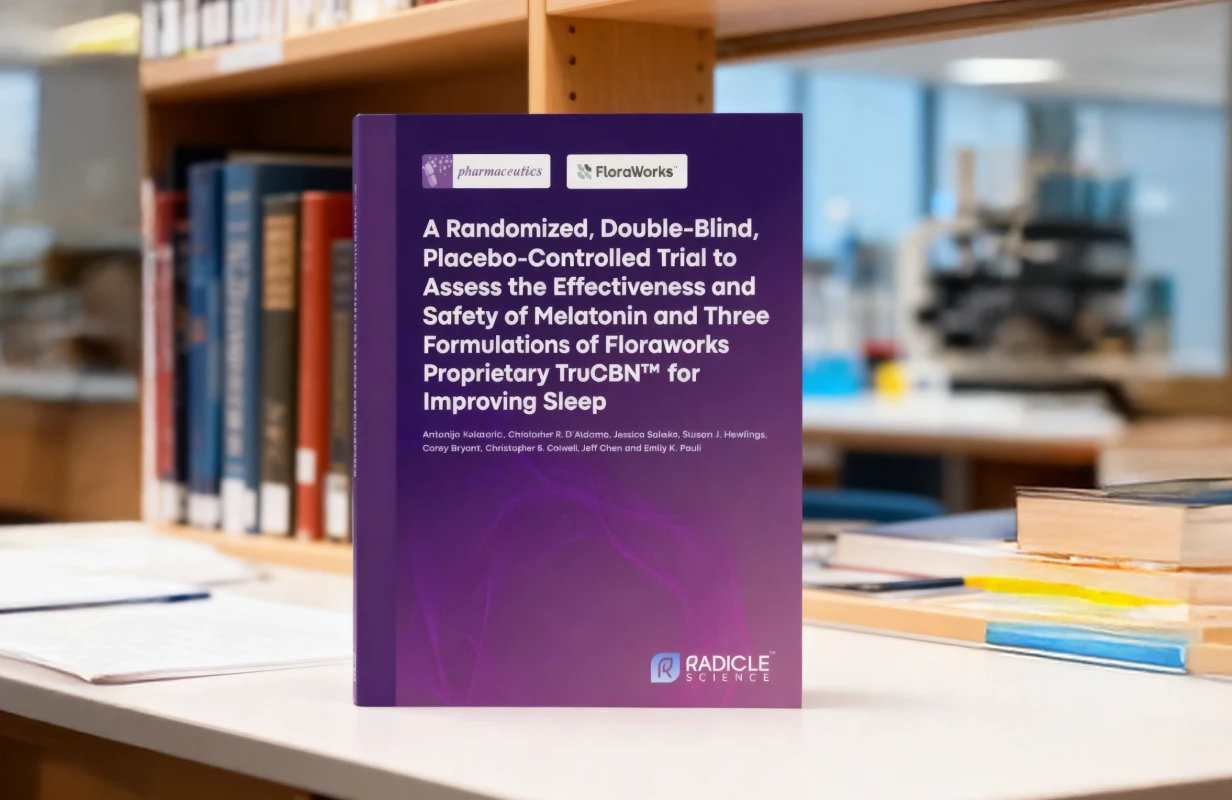
FloraWorks is already building “research methods and real‑world evidence models”. TruCBN™ is manufactured under GMP/ISO quality systems, and supported by a peer‑reviewed randomized, double‑blind, placebo‑controlled sleep trial in Pharmaceuticals that compares three TruCBN™ doses to melatonin and placebo.
Put simply: the Executive Order describes the future that FloraWorks has been quietly building toward.
Key points
The Executive Order tells federal health agencies to use real‑world evidence (RWE) to evaluate hemp‑derived cannabinoids and to use that evidence to inform standards of care.
Trade and legal coverage, such as NutraIngredients’ analysis and Lexology’s breakdown, frame the order as a turning point: fewer barriers to research, but much higher expectations for safety, labeling, and evidence.
FloraWorks’ model already matches that environment. The company leads with defensible IP, TruCBN™ clinical data in a randomized, double‑blind, placebo‑controlled trial (25 mg, 50 mg, 100 mg vs 4 mg melatonin and placebo; see Pharmaceuticals at https://www.mdpi.com/1424-8247/17/8/977), and GLP‑style toxicology to support formal regulatory pathways. Its public content on post‑melatonin sleep solutions and CBN vs. melatonin already speaks in the language of mechanisms, next‑day function, and structure/function claims.
As regulators move toward RWE and standards of care, commodity cannabinoids and under‑documented blends will find it harder to compete. Well‑characterized ingredients like TruCBN™—with clinical trial data, toxicology, IP and traceability—are positioned to anchor the next generation of cannabinoid products.
What the Executive Order actually does
The EO does not instantly legalize marijuana nationwide or deregulate CBD. Instead, it gives the federal apparatus clear instructions.
First, it directs the Attorney General to “take all necessary steps” to complete rulemaking to reschedule marijuana to Schedule III under the Controlled Substances Act. That part of the order is about aligning federal scheduling with the reality of widespread medical use and existing scientific support.
Second, and more relevant to hemp‑derived cannabinoids, it focuses on definition, dosing, and evidence. The order calls for updating statutory definitions of hemp‑derived cannabinoid products and for developing a regulatory framework that includes guidance on THC limits per serving and per container, as well as considerations around CBD:THC ratios. This is a direct response to inconsistent labeling and the safety concerns described in the EO, including mis‑labeled CBD products and products drifting over THC thresholds.
Most importantly for companies like FloraWorks, the EO then instructs HHS, FDA, CMS, and NIH to:
“develop research methods and models utilizing real-world evidence to improve access to hemp-derived cannabinoid products in accordance with Federal law and to inform standards of care.”
That one sentence is doing a lot of work. It tells agencies to:
- Look at how hemp‑derived cannabinoids are used in the real world.
- Use those data to decide who should access them, at what doses, under what conditions.
- Build toward standards of care, not just a patchwork of state programs and ad‑hoc products.
In other words, the federal posture is shifting from “we’re not sure what to do with these” to “we’re going to measure them and integrate them where appropriate.”
Why this is a turning point for hemp‑derived cannabinoids
For the last several years, hemp‑derived cannabinoids have existed in a strange space. The Farm Bill opened the door; consumer demand did the rest. Millions of people now use CBD and minor cannabinoids, but:
- Labeling has often been unreliable.
- The science has been uneven.
- FDA signaling has been cautious.
- Doctors and patients have had little formal guidance.
The Executive Order explicitly acknowledges that one in five US adults and nearly 15 percent of seniors have used CBD in the past year, and that some clinical studies show pain improvements with CBD. It also notes the risks of inaccurate labels, unclear THC content, and unexamined interactions in older adults and people on multiple medications.
By calling for real‑world evidence models and standards of care, the EO sets the expectation that hemp‑derived cannabinoids will be evaluated more like other serious health products:
- Are they manufactured consistently?
- Are doses rational and tied to data?
- Do we know how they perform in different populations over time?
- Can regulators and clinicians point to high‑quality ingredients and say, “This is the baseline we trust”?
That is a very different world from the early CBD era. It’s closer to the environment FloraWorks has been designing for from day one.
How FloraWorks is already aligned with the EO
FloraWorks’ strategy has always been evidence and infrastructure first, not “launch and hope.” The company’s approach can be thought of in two linked stages.
The first stage is to generate credible human evidence and qualify safety. TruCBN™ is the clearest illustration. It is an ultra‑pure CBN ingredient used as the active in a peer‑reviewed, randomized, double‑blind, placebo‑controlled trial published in Pharmaceuticals (MDPI). That study evaluated 25 mg, 50 mg, and 100 mg TruCBN™ softgels against placebo and 4 mg melatonin, using PROMIS Sleep Disturbance 8A as a primary outcome. All three TruCBN™ doses significantly improved sleep disturbance vs placebo, and their performance was comparable to melatonin. The article is publicly available at https://www.mdpi.com/1424-8247/17/8/977 and summarized for non‑technical readers on the TruCBN™ page and in outlets like Nutraceutical Business Review.
Around that trial, FloraWorks has also invested in GLP‑style toxicology and FDA‑aligned safety work to support a New Dietary Ingredient (NDI) pathway for CBN isolate. NutraIngredients USA has already reported on that regulatory strategy. This is exactly the type of information regulators will lean on when they start defining what “safe and evidence‑based” looks like in a real‑world evidence framework.
The second stage is to translate that evidence into scalable ingredients and products. FloraWorks has built TruCBN™ as a clinical‑grade ingredient that can be manufactured at scale under the same specifications used in its randomized trial. As TruCBN™ moves into commercial formulations, that continuity will matter for real‑world evidence: “TruCBN™ 50mg” in a finished product can be tied back to the same CBN profile that was studied in the published clinical paper.
TruCBN™ as a real‑world evidence anchor
The EO’s call for research methods and models “utilizing real‑world evidence” is not abstract. To work, those models need ingredients that are standardized and widely used enough to generate usable data.
TruCBN™ has several qualities that make it a natural anchor for this kind of work:
- It is chemically well‑defined: a single active (CBN) with tight impurity controls and a GMP production route.
- Its dose range and safety profile in sleep applications have already been explored in a controlled RCT: 25–100 mg nightly with favorable tolerability and clear patient‑reported benefits.
- It is already being deployed through brands and prototypes, powered by FloraWorks’ B2B supply chain.
In practice, that means registries, digital health programs, or payer pilots looking at hemp‑derived sleep products can build cohorts around a known, clinically studied ingredient rather than a moving target. Outcomes can be compared across products because the underlying CBN is the same. That is exactly what regulators have in mind when they talk about using RWE to “improve access” and “inform standards of care.”
FloraWorks’ own content, including “Post‑Melatonin Sleep Solutions: How CBN Is Redefining Rest” and “CBN vs. Melatonin: What Supplement Brands Should Know About Sleep Quality and Next‑Day Alertness”, already make this point to brands: if you want sleep products that can survive in a standards‑driven world, you need ingredients that are ready for scrutiny.
Building the next layer of real‑world evidence
The Executive Order doesn’t just ask for more clinical trials; it specifically calls for “research methods and models utilizing real‑world evidence” for hemp‑derived cannabinoids. That means understanding how products perform over time in actual consumers, not just in short, tightly controlled studies.
FloraWorks is leaning into that direction. The randomized, double‑blind, placebo‑controlled TruCBN™ sleep study in Pharmaceuticals is the foundation. It shows how TruCBN™ behaves in a rigorously controlled setting, at clearly defined doses, in a specific sleep‑disturbed population. But it’s only the first layer of the evidence stack the Executive Order is pointing toward.
The next layer is longitudinal, real‑world data. FloraWorks’ upcoming study with PeopleScience is designed to do exactly that: gather ongoing outcome data on TruCBN™ in everyday use, across real consumer populations rather than just trial volunteers. Instead of looking only at a few weeks in a lab context, this work will follow people over time, tracking sleep quality, next‑day function, and other relevant endpoints as they use TruCBN™ in the wild.
That kind of dataset can answer questions that conventional trials struggle with. How do different subgroups respond over months instead of weeks? What patterns emerge when TruCBN™ is used alongside common medications or other supplements? How do real‑world adherence, lifestyle factors, and product formats influence outcomes? Those are precisely the questions regulators and clinicians will care about as they start to define access rules and standards of care for hemp‑derived cannabinoids.
By pairing a peer‑reviewed RCT with a structured, longitudinal real‑world evidence program, FloraWorks is building the kind of evidence ecosystem the Executive Order envisions: controlled trials to establish signal and safety, followed by real‑world models to understand how that signal plays out at scale in the hands of actual consumers.
A mechanisms‑first roadmap for standards of care
The Executive Order doesn’t just ask whether cannabinoids “work.” It explicitly talks about better informing patients and doctors, focusing on long‑term health effects in vulnerable populations, and closing the gap between use and knowledge.
To do that well, regulators and clinicians will eventually need more than efficacy endpoints. They will need mechanisms:
- Which receptors and pathways are involved?
- How do those mechanisms interact with pain, anxiety, neurodegeneration, or metabolic processes?
- Where might risks or drug–drug interactions surface?
FloraWorks describes its R&D strategy as mechanisms‑first, with a strong focus on the central nervous system (CNS). That orientation shows up in how the company talks about TruCBN™: not only as a sleep ingredient, but as a molecule with specific actions on cannabinoid receptors, TRP channels, and potentially orexin pathways, which could be relevant for broader CNS applications over time. The TruCBN™ page and FloraWorks’ educational content both lean into that level of detail rather than staying at generic “CBN for sleep” talking points.
This is the mindset that fits an emerging standards‑of‑care conversation. It is easier for agencies and professional societies to define where a cannabinoid fits if they can connect it to mechanisms, dosage, and clearly documented outcomes. TruCBN™ gives them that combination in a sleep context today, and FloraWorks’ CNS‑focused roadmap is aimed at extending that clarity into other indications over time.
Frequently asked questions
Does this Executive Order make marijuana or CBD “legal” everywhere?
No. The EO does not legalize marijuana nationwide or loosen all CBD rules overnight. It pushes the DOJ to complete the Schedule III rescheduling process for marijuana and directs health agencies to develop real‑world evidence frameworks and regulatory definitions for hemp‑derived cannabinoid products. The actual legal status of specific products will still depend on existing laws, future rulemaking, and how products are formulated and marketed.
Text of the EO: https://www.whitehouse.gov/presidential-actions/2025/12/increasing-medical-marijuana-and-cannabidiol-research/
What exactly is “real‑world evidence” in this context?
Real‑world evidence (RWE) is data gathered outside of traditional, tightly controlled trials. It includes registry data, insurance claims, electronic health records, patient‑reported outcomes, and structured post‑marketing studies. The EO is asking agencies to use RWE to understand how hemp‑derived cannabinoids perform in actual use—who benefits, at what doses, with what risks—and to use that understanding to inform access and standards of care.
How is TruCBN™ different from generic CBN products under this new framework?
TruCBN™ is an ultra‑pure CBN ingredient backed by a peer‑reviewed randomized, double‑blind, placebo‑controlled sleep trial in Pharmaceuticals(https://www.mdpi.com/1424-8247/17/8/977). It is manufactured under GMP/ISO systems and supported by GLP‑style toxicology and a formal regulatory strategy. Many generic CBN products lack that combination of IP, clinical data, and manufacturing discipline. In an RWE‑driven world, that makes TruCBN™ a safer, more reliable foundation for evidence‑based products.
What does this mean for brands currently working with FloraWorks?
For existing partners, the EO is effectively a tailwind. It validates a strategy that assumes regulators will eventually demand safety data, clinical outcomes, and traceable ingredients. Products built on TruCBN™ are already closer to what those future expectations will look like. It also opens the door to deeper collaborations around RWE, registry participation, and next‑generation claims built on combined trial and real‑world data.
Is FloraWorks expanding beyond sleep because of this EO?
Sleep remains a strategic focus, particularly as consumers and brands look for post‑melatonin alternatives and clearer guidance on CBN vs. melatonin. At the same time, FloraWorks’ mechanisms‑first, CNS‑focused roadmap means it is exploring additional areas where cannabinoids could play a role in future standards of care, guided by mechanistic insights and in‑house data. The EO doesn’t start that process, but it does make the destination more visible.
Summary
The “Increasing Medical Marijuana and Cannabidiol Research” Executive Order is not just a policy footnote. It is a directional marker: marijuana moving toward Schedule III, and hemp‑derived cannabinoids moving into a measured, evidence‑driven era.
For companies built on quick launches and vague claims, that is a warning. For FloraWorks, it is confirmation. Ingredients like TruCBN™, GLP toxicology, peer‑reviewed clinical trials, and a mechanisms‑first CNS research roadmap are no longer “nice to have.” They are the exact elements regulators are signaling they want to see as they build real‑world evidence models and begin to define standards of care.
As FDA, CMS, NIH, and HHS translate the EO into concrete guidance, FloraWorks is positioned not just to keep up, but to help shape what good cannabinoid practice looks like—through TruCBN™, its broader bulk cannabinoid portfolio, and partnerships with brands that are ready to compete on evidence, not just price and potency.