
Executive summary
Most sleep ingredients force the brain toward sleep. TruCBN™ takes a different route.
It targets the systems that keep people awake at 2 a.m. and helps stabilize sleep through the night, without intoxication or known dependence.
This article explains why TruCBN™ is a differentiated option for mainstream supplement brands that need:
- A non‑intoxicating, non‑hormonal sleep aid
- Randomized, double‑blind, placebo‑controlled human data
- A standardized, single‑ingredient CBN they can trust in finished formulations
Key takeaways
- CBN is not THC and not CBD. CBN is distinct from THC and CBD. Cannabinol (CBN) is a separate cannabinoid with lower CB1 receptor activity than THC and a non‑intoxicating profile at clinically studied doses. Emerging data suggest a more consistently sleep‑supporting profile than CBD, whose effects on sleep can be mixed depending on dose and context.
Kesner & Lovinger, 2020; Maioli et al., 2022 - TruCBN™ delivers better sleep. In a randomized trial of 20 mg purified CBN, participants reported fewer nighttime awakenings and lower overall sleep disturbance, with no change in sleep onset latency or next‑day fatigue—suggesting a stronger effect on sleep continuity than on falling asleep.
Bonn‑Miller et al., 2024 - Head‑to‑head data with melatonin. In a large randomized, double‑blind, placebo‑controlled study, nightly doses of 25–100 mg TruCBN™ and 4 mg melatonin all improved validated sleep‑disturbance scores compared with placebo, with no meaningful differences between TruCBN™ and melatonin and a similarly favorable safety profile.
Kolobaric et al., 2024 - Non‑intoxicating with emerging safety data. Across modern trials of CBN (including TruCBN™ formulations) at 20–100 mg nightly, CBN has been well tolerated, with no evidence of THC‑like intoxication or abuse‑type signals in the short term. GLP genotoxicity and 14‑day oral toxicity studies support a wide safety margin, and higher single doses (30–300 mg) are currently under evaluation in insomnia patients..
Lavender et al., 2023 (CUPID protocol) - Mechanism aligns with real‑world complaints. Preclinical and clinical data indicate that CBN modulates sleep via the endocannabinoid system and related pathways that regulate arousal and sleep–wake cycles, leading to improvements in sleep continuity without the heavy “knock‑out” profile associated with some traditional hypnotics.
Low et al., 2023; Kesner & Lovinger, 2020
For brands, this makes TruCBN™ a compelling melatonin alternative for customers who are tired of next‑day grogginess, hormonal concerns, or inconsistent results.
TruCBN™ sleep ingredient overview
The sleep problem TruCBN™ is built to solve
Most consumers with chronic sleep complaints do not struggle only with falling asleep. They struggle with:
- Waking multiple times per night
- Early‑morning awakenings
- Non‑restorative sleep despite “enough hours” in bed
This pattern is often called sleep maintenance insomnia.
Current options have meaningful gaps:
- Melatonin primarily shifts circadian timing and helps with sleep onset and jet lag; its effects on chronic sleep maintenance are modest and variable.
American Academy of Sleep Medicine guidance - Prescription hypnotics can be effective but carry risks of tolerance, dependence, rebound insomnia, and next‑day psychomotor impairment.
- Popular botanicals and magnesium often lack large, well‑controlled trials, and effects are inconsistent across products and doses.
At the same time, consumers increasingly ask for:
- Natural sleep ingredients
- Non hormonal sleep aids
- Non‑intoxicating options with clear safety data
This is the gap where CBN for sleep – and specifically TruCBN™ – is starting to matter.
What makes CBN different from THC and CBD?
From a formulator’s perspective, “a cannabinoid for sleep” only works if it behaves very differently from THC and more predictably than CBD.
Pharmacology in brief
Evidence from preclinical and mechanistic reviews shows:
- CBN is a minor phytocannabinoid formed via oxidative degradation of THC.
Maioli et al., 2022 - CB1 and CB2 receptors
- THC: high‑affinity CB1 agonist → intoxication, psychomotor impairment
- CBD: low CB1 affinity, complex indirect effects; sleep effects can be alerting or sedating depending on dose
- CBN: partial agonist with substantially lower CB1 potency than THC and moderate CB2 activity, consistent with non‑intoxicating, mild sedative effects
Kesner & Lovinger, 2020; Maioli et al., 2022
- TRP channels and orexin system
- CBN interacts with TRP channels (TRPA1, TRPV1, TRPV2, TRPV4), which participate in pain signaling, thermoregulation, and circadian processes.
Low et al., 2023 - Preclinical data suggest cross‑talk between CB1 and orexin‑1 receptors, which regulate wakefulness and arousal.
Kim et al., 2021
- CBN interacts with TRP channels (TRPA1, TRPV1, TRPV2, TRPV4), which participate in pain signaling, thermoregulation, and circadian processes.
Taken together, this profile supports gentle arousal reduction and sleep maintenance, not the strong intoxication or broad cortical suppression seen with THC or some GABAergic hypnotics.
What the clinical data actually show about CBN for sleep
The modern CBN sleep dataset is still small but much stronger than historical anecdote. Under the Truth Protocol, it is important to be precise:
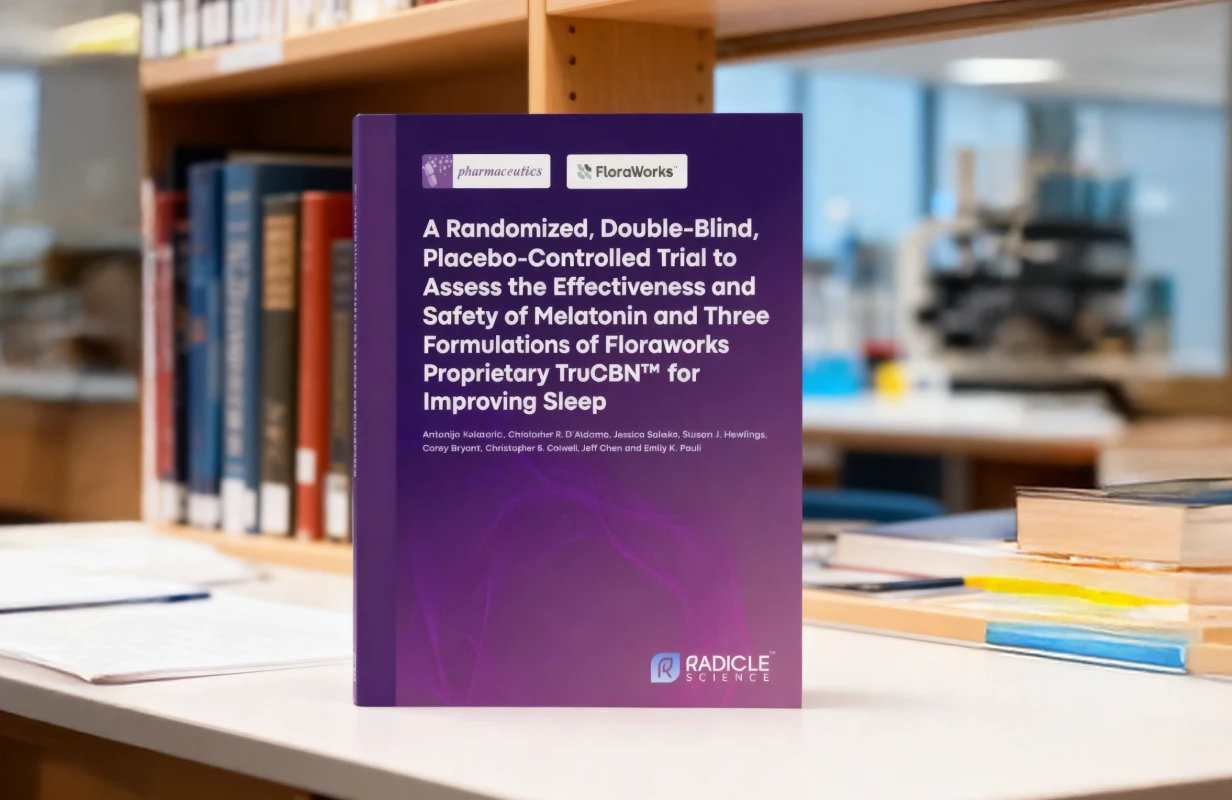
1. TruCBN™ vs melatonin vs placebo
Study: Kolobaric et al., 2024, Pharmaceuticals
Design: Randomized, double‑blind, placebo‑controlled, decentralized trial
Population: Adults with self‑reported sleep disturbance
Arms:
- TruCBN™ 25 mg nightly (softgels)
- TruCBN™ 50 mg nightly
- TruCBN™ 100 mg nightly
- Melatonin 4 mg nightly (reference)
- Placebo
Primary endpoint: PROMIS Sleep Disturbance 8A over 4 weeks
Key findings (as reported in the paper):
- All active arms (three TruCBN™ doses and melatonin) significantly improved sleep disturbance vs placebo.
- No statistically significant difference in efficacy between TruCBN™ doses and melatonin.
- CBN was well tolerated, with no serious treatment‑related adverse events and no evidence of intoxication.
Full text, MDPI · PubMed
This trial provides the first head‑to‑head comparison of CBN and melatonin in a randomized, double‑blind, placebo‑controlled design, and specifically validates the TruCBN™ ingredient.
2. CBN with and without CBD
Study: Bonn‑Miller et al., 2024, Experimental and Clinical Psychopharmacology
Design: Double‑blind, randomized, placebo‑controlled
Population: Adults with poor sleep quality
Arms: CBN 20 mg, CBN 20 mg + CBD, and placebo (capsules, 7 nights)
Key findings:
- CBN (with or without CBD) reduced nighttime awakenings and overall sleep disturbance vs placebo, based on patient‑reported outcomes.
- There were no clear improvements in sleep onset latency or next‑day fatigue.
- Adverse events were generally mild; no THC‑like intoxication was observed.
PubMed · summary coverage on NORML
This study reinforces a consistent pattern: CBN appears to help people stay asleep more than it helps them fall asleep faster.
3. CUPID: Objective sleep architecture (protocol)
Study: Lavender et al., 2023, BMJ Open (CUPID protocol)
Design: Randomized, double‑blind, placebo‑controlled, three‑arm cross‑over
Population: Adults with diagnosed insomnia disorder
Arms: Single doses of 30 mg CBN, 300 mg CBN, and placebo
Primary outcome:
- Wake after sleep onset (WASO) in minutes, measured by polysomnography (PSG)
Secondary outcomes:
- Sleep onset latency, spectral EEG power, next‑day driving simulator performance, psychomotor vigilance, and mood
Results are not yet published, so efficacy conclusions cannot be drawn. The protocol confirms that investigators see CBN as promising enough to merit objective PSG and next‑day function testing.
BMJ Open protocol · PubMed
Why TruCBN™ specifically?
CBN as a molecule is one thing. TruCBN™ as an ingredient system is another. For brands, the distinction matters.
1. Standardized CBN with clinical continuity
Most CBN products in the market have:
- Variable cannabinoid profiles
- Limited or no published clinical data on the exact ingredient lot used
- Inconsistent manufacturing standards
By contrast, TruCBN™:
- Was the specific CBN ingredient used in the Kolobaric et al. RCT, with three well‑characterized dose levels.
- Has been evaluated alongside melatonin in a randomized, double‑blind, placebo‑controlled setting with a clearly described formulation (softgel) and dosing regimen.
Kolobaric et al., 2024
This continuity from bench → clinical trial → commercial ingredient is what many mainstream brands expect.
2. Mechanistic fit for “stay asleep” positioning
From the CBN State of the Science and broader literature:
- CBN’s relatively low CB1 efficacy and CB2 activity fit a non‑intoxicating, gently sedating profile.
Kesner & Lovinger, 2020 - TRP channel and possible orexin interactions align with reduced nighttime arousals rather than forced sedation.
Low et al., 2023; Kim et al., 2021 - Human trials consistently show:
- Improved subjective sleep disturbance
- Little or no change in sleep onset latency
- No consistent next‑day impairment signal
Bonn‑Miller et al., 2024; Kolobaric et al., 2024
This is a clean fit for positioning TruCBN™ as a sleep maintenance–focused, non‑intoxicating ingredient rather than a simple “knock‑out” aid.
3. Non‑hormonal, non‑intoxicating alternative to melatonin
A large critical review of cannabinoids and sleep concluded that:
- Evidence for cannabinoids in insomnia is modest but real, and
- Safety concerns are mainly linked to THC, high‑dose CBD, and unregulated products.
Lavender et al., 2022, Chest
TruCBN™ addresses several common objections to standard sleep aids:
- Not a hormone: avoids concerns about chronic melatonin use in adults and children.
- Non‑intoxicating at studied doses: no THC‑like cognitive or psychomotor effects have been reported in RCTs of TruCBN™.
- No evidence of dependence or withdrawal: current trials show no signal for addiction‑like behaviors, though long‑term data remain limited.
Key point for brands: TruCBN™ does not replace melatonin’s role in circadian phase shifting. Instead, it offers a non hormonal, non intoxicating option focused on sleep continuity and perceived sleep quality.
Formulation considerations for TruCBN™
The clinical work around CBN highlights several practical points for product development:
- Dose range:
- Modern trials typically use 20–100 mg nightly for CBN in sleep applications.
Bonn‑Miller et al., 2024; Kolobaric et al., 2024 - In the TruCBN™ RCT, improvements were evident from 25 mg, with no clear dose‑response separation between 25, 50, and 100 mg.
- Modern trials typically use 20–100 mg nightly for CBN in sleep applications.
- Delivery form:
- Published TruCBN™ trials used softgels, which support absorption of this lipophilic molecule.
- For consumer products, TruCBN™ can be adapted to softgels, gummies, tablets, or drink mixes, but bioavailability and stability must be considered at the formulation level.
- Pairing with other ingredients:
- Current evidence does not show a clear benefit from adding low‑dose CBD to CBN for sleep.
Bonn‑Miller et al., 2024 - When combined with melatonin or botanicals, claims should stay grounded in known mechanisms and available human data, without implying synergy that has not been tested.
- Current evidence does not show a clear benefit from adding low‑dose CBD to CBN for sleep.
Research gaps and what they mean for claims
Under the Truth Protocol, it is important to acknowledge what is not known yet.
Current gaps include:
- Objective sleep architecture: High‑quality PSG data on CBN’s effects on NREM, REM, and WASO are pending (CUPID trial).
Lavender et al., 2023 - Long‑term use: Most trials are short (1–4 weeks). There are no large, long‑duration RCTs on nightly CBN use over many months or years.
- Special populations: Limited data exist for:
- Older adults with comorbid conditions
- Patients on multiple CNS‑active medications
- Adolescents or children
- Head‑to‑head comparisons beyond melatonin: There are few or no RCTs directly comparing TruCBN™ to antihistamines, valerian, magnesium, or prescription hypnotics.
For brands, this means:
- It is accurate to say TruCBN™ is clinically studied for sleep quality and maintenance in adults with sleep complaints.
- It is not yet accurate to claim definitive superiority over melatonin or other sleep aids, or to claim long‑term disease‑modifying effects.
Frequently asked questions about TruCBN™ for sleep
1. Is TruCBN™ intoxicating or habit‑forming?
Clinical trials of TruCBN™ and other CBN formulations have not reported THC‑like intoxication or abuse‑type behaviors at studied doses (up to 100 mg nightly and single doses up to 300 mg). Long‑term dependence studies are still limited.
Kolobaric et al., 2024; Lavender et al., 2023
2. How does TruCBN™ differ from melatonin?
Melatonin is a hormone that adjusts circadian timing and can help with sleep onset and jet lag. TruCBN™ is a non‑hormonal cannabinoid that, in trials, has mainly improved sleep maintenance and overall sleep disturbance, with efficacy comparable to melatonin but a distinct mechanism.
3. What is a typical TruCBN™ dose in clinical studies?
Modern RCTs of TruCBN™ have used 25, 50, and 100 mg once nightly, showing benefit at all three doses with no clear dose‑response separation. Other CBN trials often use 20–100 mg doses. Product dosing should align with the specific formulation and regulatory context.
Kolobaric et al., 2024; Bonn‑Miller et al., 2024
4. Does combining CBN with CBD improve sleep outcomes?
In Bonn‑Miller et al., adding CBD to CBN did not clearly enhance sleep outcomes compared with CBN alone at the doses tested. Current evidence does not support a broad claim of synergy for sleep.
PubMed
5. Is TruCBN™ appropriate for every type of insomnia?
Current data are strongest for adults with self‑reported sleep disturbance and nighttime awakenings. Evidence in diagnosed insomnia disorder, older adults, and people with complex medical conditions is still emerging (e.g., CUPID trial in progress). Formulators should avoid one‑size‑fits‑all claims.
Why TruCBN™ for sleep?
For mainstream supplement brands, the case for TruCBN™ rests on three pillars that are supported by current evidence:
- Mechanistic fit
- Targets systems involved in sleep maintenance, arousal, and pain/temperature signaling, rather than forcing sedation.
- Clinical validation
- Evaluated in randomized, double‑blind, placebo‑controlled trials with clear improvements in self‑reported sleep disturbance and head‑to‑head data vs melatonin.
- Non‑hormonal, non‑intoxicating profile
- Responds directly to consumer demand for natural sleep ingredients that do not rely on hormones or produce THC‑like effects.
The research base is still evolving and does not justify exaggerated or disease‑level claims. Within those boundaries, TruCBN™ is a well‑supported, differentiated option for brands seeking a science‑driven, melatonin‑alternative sleep ingredient that aligns with modern expectations for safety, transparency, and regulatory readiness.